Director of "Beautiful Taiwan 3D" | Qu Quanli
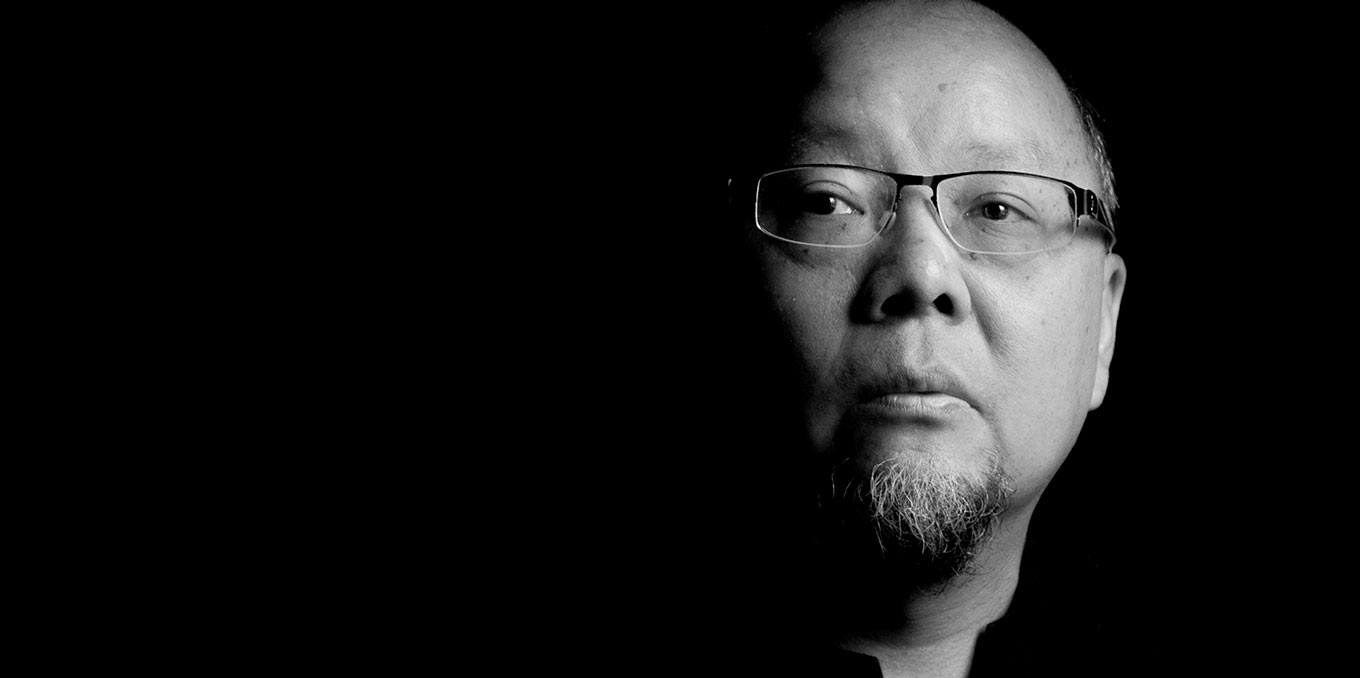
PRESENTER
The world needs fools! Director of "Beautiful Taiwan 3D" | Qu Quanli
Director Qu Quanli, known as the "Chinese 3D imaging representative," has a very ordinary life, but his life journey is as dramatic and exciting as a script.
At the age of 35, when Director Qu was at the peak of his career, he was diagnosed with a fist-sized brain tumor and was told he might have less than six months to live. After he bravely underwent surgery, he was left with the aftereffects of being partially deaf and blind, as well as facial nerve paralysis. True to his name, he believes that life is about giving your all.
In 2013, after winning the "World 3D Award" in Hollywood, he has won numerous awards in the field of 3D imaging in recent years. These technologies, which were developed from scratch, are the result of Qu's engagement with 3D since 2008, involving over 3,000 days and nights of shooting, traveling 220,000 kilometers, documenting 300 artisans on the verge of disappearing, and countless landscapes in Taiwan facing change.
Having heard the bell of life’s end ringing close by, he vowed that "life is like walking towards the distance, but in reality, it is walking towards one’s own heart." He hopes to continue creating 3D works and let more people around the world see the beauty of Taiwan. Without financial support, he built Taiwan's first 3D mobile movie vehicle, which has traveled over 130,000 kilometers, 316 townships, and 1,200 rural elementary schools in more than 1,200 days since it started running in 2014, allowing 130,000 students and elderly people to see 3D documentary films that record Taiwan, hoping to give back to this land and its children with his expertise.
Perhaps there are many difficulties in life, but he always believes that "the journey may be tough, but no matter how difficult it is, we must bravely continue to move forward. Just do it!"
Q & A
Q: How do you start your day?
A: My day has two modes. In Taipei: After I finish my morning routine, I take my little dog and go buy some Taiwanese breakfast (sweet potato porridge), then drive to the Jinshan farmhouse to check on my happy farm, pulling weeds and getting some exercise. When working out of town: Every morning after I wake up, I take a walk around the neighborhood, then go home to prepare a boiled egg, a banana, and a cup of oatmeal for breakfast, and after that, I sit at the door enjoying the scenery.
Q: Where do you usually hang out the most?
A: Jinshan Old Street, I almost go to the farmhouse in Jinshan every day to turn the soil and fix things. I also buy buns or sweet potato porridge near the old street to eat at the farmhouse. I am actually a homebody; besides work, I prefer to stay at home and do not like to go to crowded places.
Q: What is the restaurant you visit most often?
A: I prefer tasting local flavors from street vendors over restaurants. If you have the chance to go to Jinshan, you can buy Jinshan Wang meat buns near the old street, or visit the 36-year-old store "A Lang Sweet and Spicy" in the market, where everything is made and fried on the same day, allowing you to taste the traditional old flavors. I recommend the taro pastry, which is a seasonal item available only in June and July. Jinshan Wang meat buns.http://kswang.com.tw/about.html
Q: What is your entertainment after work?
A: After work, I usually feel very tired. After taking a shower at home, my biggest entertainment is reading, and besides that, I listen to music and browse Facebook for information. Rather than calling it entertainment, I pursue the joy of experiencing life. "Experience comes from living with intention, and emotions come from experiencing with intention."
Q: Having filmed many movies, have you encountered any interesting or memorable experiences?
A: The most interesting thing is that there are always new challenges during the filming process. Many people ask me why I shoot in 3D, but I actually don't know (laughs), because I learn and do everything, and only after doing it do I know what will happen. You don't know what type of film the next one will be, who you will meet; I didn't know I would win an award with Ang Lee or collaborate with Director Hou. This is the fun of filmmaking and the most charming aspect of this job.
Q: If you were not a director, what would you like to do?
A: Speaker, I think sharing is a wonderful thing. Sharing one's own story can bring strength to others, which is great. Even though I have given more than three hundred speeches now, I am still adjusting and practicing. Even though I can speak fluently now and grasp the rhythm, I still need to keep practicing and incorporate new experiences into my speeches every day.
Q: Director Qu has suggestions for young people who want to develop in the direction of directing?
A: According to global trends, working in the film and television industry is good, but one must first assess their own abilities and whether they can accept the lifestyle of filmmaking; these are all factors to consider. Nowadays, with smartphones and cameras readily available, everyone is a director, and the ease of access to equipment has lowered the entry threshold too much. The biggest problem is that many have not solidly learned the basic logical theories. In the past, it was a master-apprentice system, where one would carry equipment for three years before even touching a camera. During those three years, one would practice the basics of composition, lighting, and other foundational skills, which is the essence. The professional foundation in any industry is not built overnight; it is accumulated slowly.
Q: What is a book you have read recently? What insights or thoughts do you have after finishing it?
A: I recently reread Laozi's "Tao Te Ching". When I read it before, I could only grasp its meaning superficially. After gaining more life experience, looking back at it now allows me to better understand what is written in the book. When I encounter parts I don't understand, looking online at the annotations made by others is actually very interesting; everyone's experiences and perspectives lead to different interpretations.
Q: What do you think is the most interesting or attractive place in Taiwan?
A: Taiwan is a small island surrounded by the sea, rich in natural ecology. The migration of the purple butterfly at Dawu Mountain in Pingtung, known as "Island Gi Na," ranks as the second largest overwintering butterfly valley in the world alongside the Monarch Butterfly Valley in Mexico. This land may not be large, but it can be compared to the Monarch Butterfly Valley in Mexico. Located at the southernmost tip of Taiwan, Hengchun lives up to its name "Spring All Year Round," with the charm and romance of the sea. It became famous through director Wei Te-sheng's film "Cape No. 7." The historical and human aspects of the ancient city, along with its unique natural conditions, make it the place on the island closest to the sun, with a slender cape pointing towards the equator. Taiwan is very interesting, with mountains and seas, and all kinds of scenery!!!
Q: Does Director Qu have any recommended private spots?
A: Yangmingshan, the backyard of Taipei, has many attractions to see. This small area encompasses a variety of landscapes, such as Qingtian Gang, which is a lava terrace formed by the lava overflow of the Datun Volcano Group, and Dream Lake, which has rich bird ecology. If there's still time, you can take a day trip along the Yangjin Highway to the North Coast, visit Jinshan Old Street, see the Queen's Head in Yehliu, and then go to Guihou Fishing Port to eat seafood. There are many places to eat and play along the way. Yehliu Geopark.http://www.ylgeopark.org.tw/content/index/index.aspxYangmingshan National Parkhttp://www.ymsnp.gov.tw/
Q: What do you look forward to the most when staying at a hotel?
A: The room is clean, and it would be great if there was a window to see green plants or nature!
Q: What is your impression of the hotels under the Taipei Hotel brand?
A: I think what is very thoughtful about the Taipei hotels is that each one has a different style, combining the original architectural design with creative cultural elements. I was particularly impressed by the New Station Hotel Taichung, which is conveniently located right behind the Taichung train station. The entrance is clean and bright, and the key point is that the staff is very enthusiastic. Since I had to work at five in the morning the next day, the hotel staff specially asked if I needed help with a takeaway breakfast, which I thought was very considerate. The warmth of human interaction is irreplaceable.
- ADD No. 64, Section 1, Chang'an East Road, Zhongshan District, Taipei City 104
- TEL (02) 2541 0077
- FAX (02) 2541 0021
- EMAIL ambience@taipeiinn.com.tw